
 Appediet
High-Fiber Smoothie Guide: Build One Without Overdoing It
A high-fiber smoothie can be simple: start with whole fruit, add one measured fiber booster, include protein if it is a meal, and use enough liquid. The goal is a repeatable breakfast or snack—not the biggest fiber number you can fit into a blender.
For a useful high-fiber smoothie recipe, combine a whole-food base such as berries or pear with one or two fiber-rich additions such as oats, chia, or beans. Increase fiber gradually, keep the serving realistic, and record the actual recipe instead of relying on a generic smoothie entry.
This guide is for adults looking for an everyday breakfast or snack idea. It covers general nutrition and food tracking, not treatment for digestive disease, diabetes, allergies, or another medical condition.
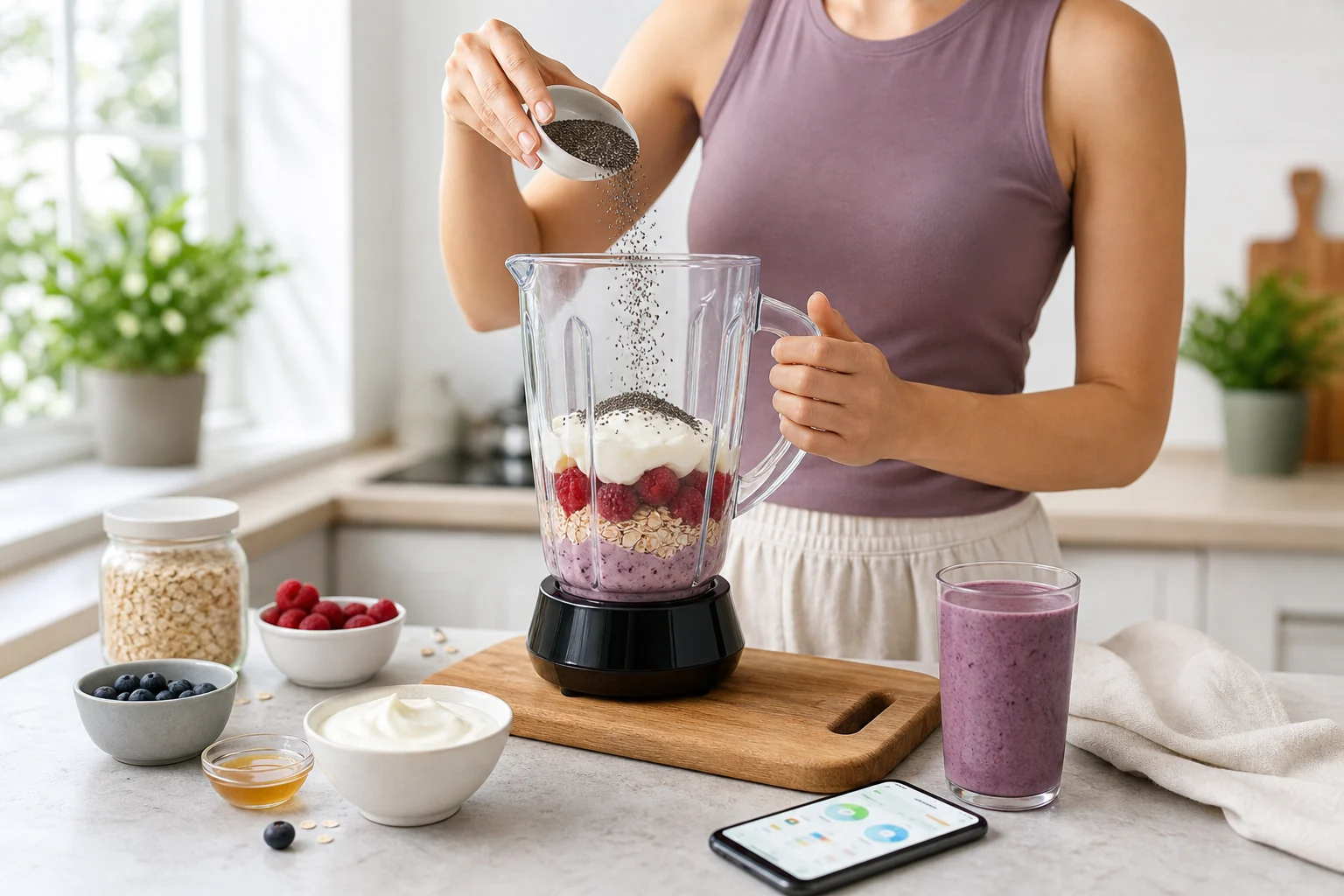
Berries, pear with skin, oats, beans, and seeds can add fiber without relying on a powder.
A sudden jump can be uncomfortable. Start modestly, use enough liquid, and increase gradually.
Track ingredients and servings once, then reuse the corrected recipe instead of choosing a vague database match.
Why high-fiber smoothies are trending in 2026
Google’s Summergeist report, based on U.S. Google Trends data, says searches for “fibermaxxing” increased 115% over the prior 90 days. It also reports that dietary fiber reached an all-time search high in 2026 and that smoothie and blueberry muffin were the top trending “high fiber” recipe searches in the prior month. That is useful evidence of interest—not proof that every viral recipe is balanced or appropriate.
Google Trends measures relative search interest, not nutrition quality or population behavior. The public report provides the 115% change for “fibermaxxing,” but the Explore interface did not provide a stable, exportable weekly index for every candidate keyword during this review.
What “high fiber” means in a practical smoothie
The FDA lists 28 grams as the Daily Value for dietary fiber. On a Nutrition Facts label, 5% Daily Value or less is considered low and 20% or more is considered high. Twenty percent of the fiber Daily Value is 5.6 grams, but a homemade smoothie does not come with a regulated label and ingredient values vary by variety, brand, measurement, and preparation.
Use the number as context, not a contest. A smoothie can make a meaningful contribution without delivering the entire day’s fiber. If your usual intake is low, a smaller increase may be more comfortable and easier to repeat.
A simple formula: base, boost, protein, and liquid
1. Choose a whole-food base. Start with one or two fruits or vegetables that blend well. Berries contribute fiber and strong flavor. Pear with skin adds body and sweetness. Spinach changes the color more than the flavor when used modestly.
2. Add one measured fiber boost. Rolled oats, chia seeds, flaxseed, or a small amount of mild white beans can thicken the drink. “Measured” matters because several spoonfuls of multiple boosters can turn an ordinary smoothie into a very large fiber jump.
3. Add protein when the smoothie is a meal. Plain yogurt, milk, soy milk, cottage cheese, tofu, or another suitable option can make the drink more substantial. Choose according to preference, dietary needs, and allergies; protein powder is optional.
4. Add enough liquid. Water, milk, or an unsweetened alternative helps the blender work and controls thickness. NIDDK advises adding fiber gradually and drinking enough liquids to help fiber work better.
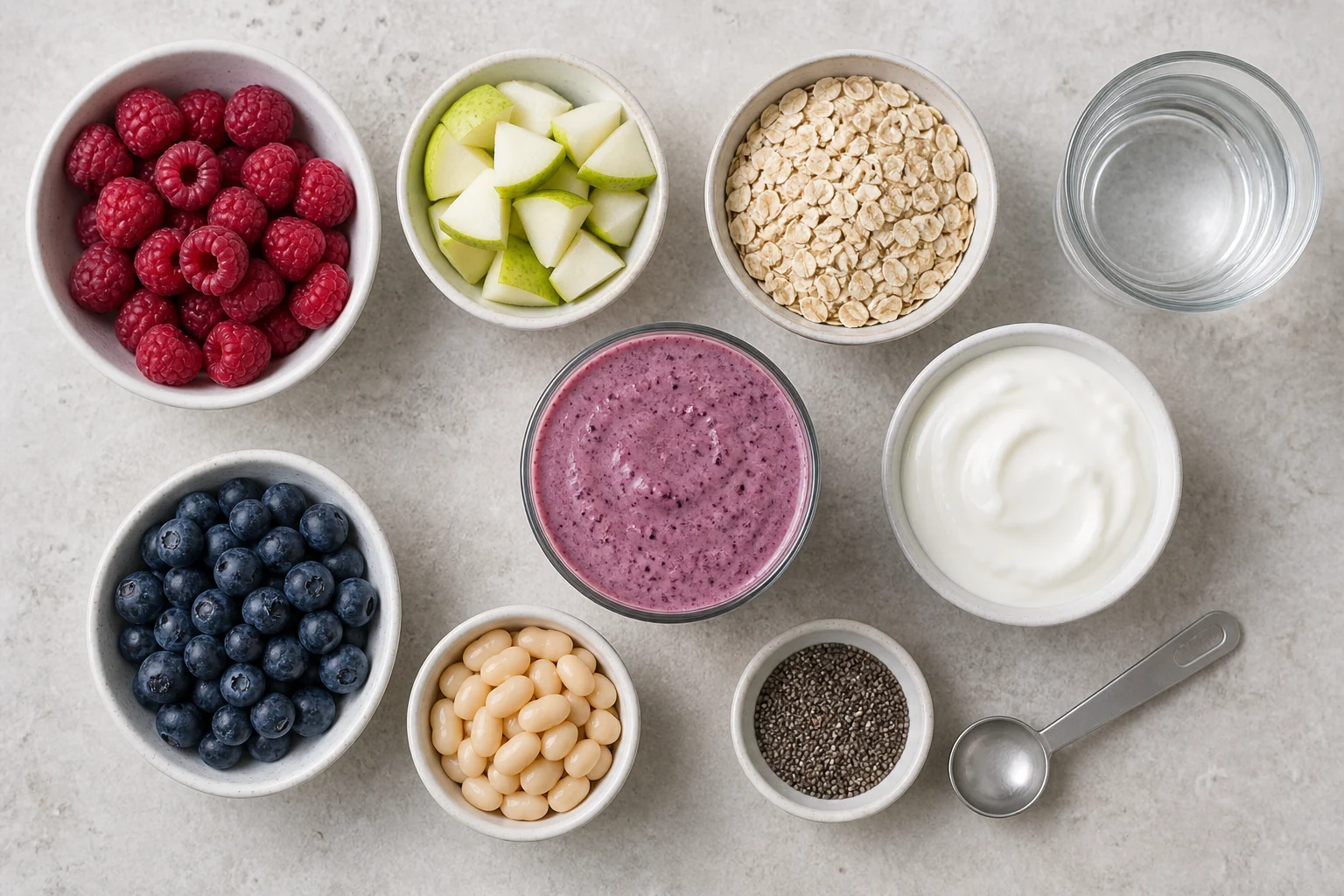
Fiber-rich ingredients that work in a blender
| Ingredient | What it adds | Practical starting point |
|---|---|---|
| Berries | Fruit fiber, tartness, color, and a familiar smoothie texture. | Use as the main fruit, fresh or frozen. |
| Pear with skin | Sweetness and body; the skin preserves more of the whole fruit. | Use a small ripe pear or part of a larger one. |
| Rolled oats | Thickness, whole-grain carbohydrate, and fiber. | Begin with a few tablespoons and blend thoroughly. |
| Chia or ground flax | Fiber and rapid thickening as the seeds absorb liquid. | Start with a small measured spoonful and add liquid. |
| White beans | A mild, creamy whole-food option with fiber and protein. | Rinse well and try a small amount before increasing. |
| Spinach | Vegetables and micronutrients with little sweetness. | Add a small handful so flavor stays balanced. |
USDA FoodData Central is a useful place to check food composition, but avoid copying one database value to every version of an ingredient. Raw versus cooked, drained versus undrained, brand, cup weight, and recipe yield can all change the estimate.
Common ways a fiber smoothie becomes less practical
- Stacking every booster: oats, chia, flax, bran, fiber powder, beans, and multiple fruits in one drink may be more than you need at once.
- Increasing too fast: NIDDK recommends adding fiber a little at a time so the body can adjust.
- Forgetting liquid: seeds and oats thicken after blending. Add liquid and avoid treating a spoon-thick mixture as a normal drink.
- Turning add-ins into invisible calories: nut butter, sweeteners, coconut products, juice, and large portions can materially change the total even when the ingredients sound healthy.
- Using a generic log: “berry smoothie” may not match your recipe, serving size, milk, yogurt, seeds, or sweetener.
Four practical high-fiber smoothie combinations
Berry–oat breakfast
Blend frozen mixed berries, a few tablespoons of rolled oats, plain yogurt, and enough water or milk for the texture you prefer. If you are new to higher-fiber breakfasts, stop there before adding seeds.
Blueberry–pear smoothie
Use blueberries, part of a ripe pear with skin, plain yogurt or tofu, and water. Pear increases sweetness without needing juice as the base.
Green oat smoothie
Blend a small banana, a handful of spinach, rolled oats, plain milk or soy milk, and ice. A modest amount of banana keeps the drink balanced without making it enormous.
Creamy bean–berry smoothie
Blend berries, a small amount of well-rinsed white beans, plain yogurt, water, and cinnamon. The beans should support the texture rather than dominate it; test a small batch first.
People with significant digestive symptoms, swallowing problems, kidney disease, diabetes medication decisions, food allergies, pregnancy concerns, or an eating-disorder history should use advice tailored by a qualified clinician or registered dietitian.
How to track a homemade smoothie accurately enough
- Log the ingredients before blending, when amounts are easiest to see.
- Use the package label for branded milk, yogurt, seeds, or protein products.
- Use a reliable database entry for whole foods and choose a matching preparation state.
- Record the final number of servings. If the blender makes two glasses, divide the recipe rather than logging the full blender as one serving.
- Save the corrected recipe. Reuse it only when the ingredients and portions are genuinely similar.
How Appediet can help with a smoothie recipe
For a homemade smoothie, Appediet works best as a reviewable recipe workflow rather than a one-photo guess. Photograph the ingredients before they disappear into the blender, add or correct hidden items such as oats, seeds, yogurt, and sweetener, then save the confirmed combination with its actual serving count. The next time you make it, reuse the saved version and edit only what changed. AppeChat can help you compare a single swap—such as pear versus juice—without pretending the camera can see inside an opaque drink.
The bottom line
A high-fiber smoothie is most useful when it is simple enough to repeat and comfortable enough to keep. Start with whole fruit, choose one measured booster, add protein if it is a meal, use enough liquid, and increase fiber gradually. Track the recipe you actually made, not the largest number attached to a trend.
FAQ
How much fiber should a smoothie contain?
There is no single target that fits everyone. The FDA Daily Value for dietary fiber is 28 grams, and 20% Daily Value or more per serving is considered high on a Nutrition Facts label. Treat one smoothie as part of the day, not a challenge to pack the entire day’s fiber into one glass.
Can I add chia seeds and oats to the same smoothie?
Yes, but start with modest amounts, especially if your usual diet is low in fiber. Both absorb liquid and can make the drink much thicker. Add enough fluid, blend fully, and notice how you feel before increasing either ingredient.
Is whole fruit better than juice in a smoothie?
Whole or blended fruit keeps more of the fruit’s fiber than strained juice. Juice can still fit, but using it as the main liquid makes it easier to add sweetness without much fiber. Water, milk, or an unsweetened alternative can leave more room for whole ingredients.
Why does a high-fiber smoothie make me feel bloated?
A large jump in fiber, a very thick drink, large portions, or certain ingredients may cause discomfort for some people. NIDDK advises increasing fiber a little at a time and drinking enough liquids. Persistent or severe symptoms deserve individualized medical advice.
Can a smoothie help with weight loss?
A smoothie can be a convenient meal or snack, but it does not guarantee weight loss. Total intake, portions, ingredients, appetite, activity, sleep, health conditions, and the rest of the eating pattern all matter. Use it as a practical food choice rather than a treatment or quick fix.
Save a smoothie you can actually repeat
Use Appediet to capture the ingredients, review the nutrition estimate, set the true serving count, and save the corrected recipe for next time.
Download Appediet